Control padded bag shape from within.

For mature brand programs that need shell, padding, quilting and binding translated into a repeatable production reference.

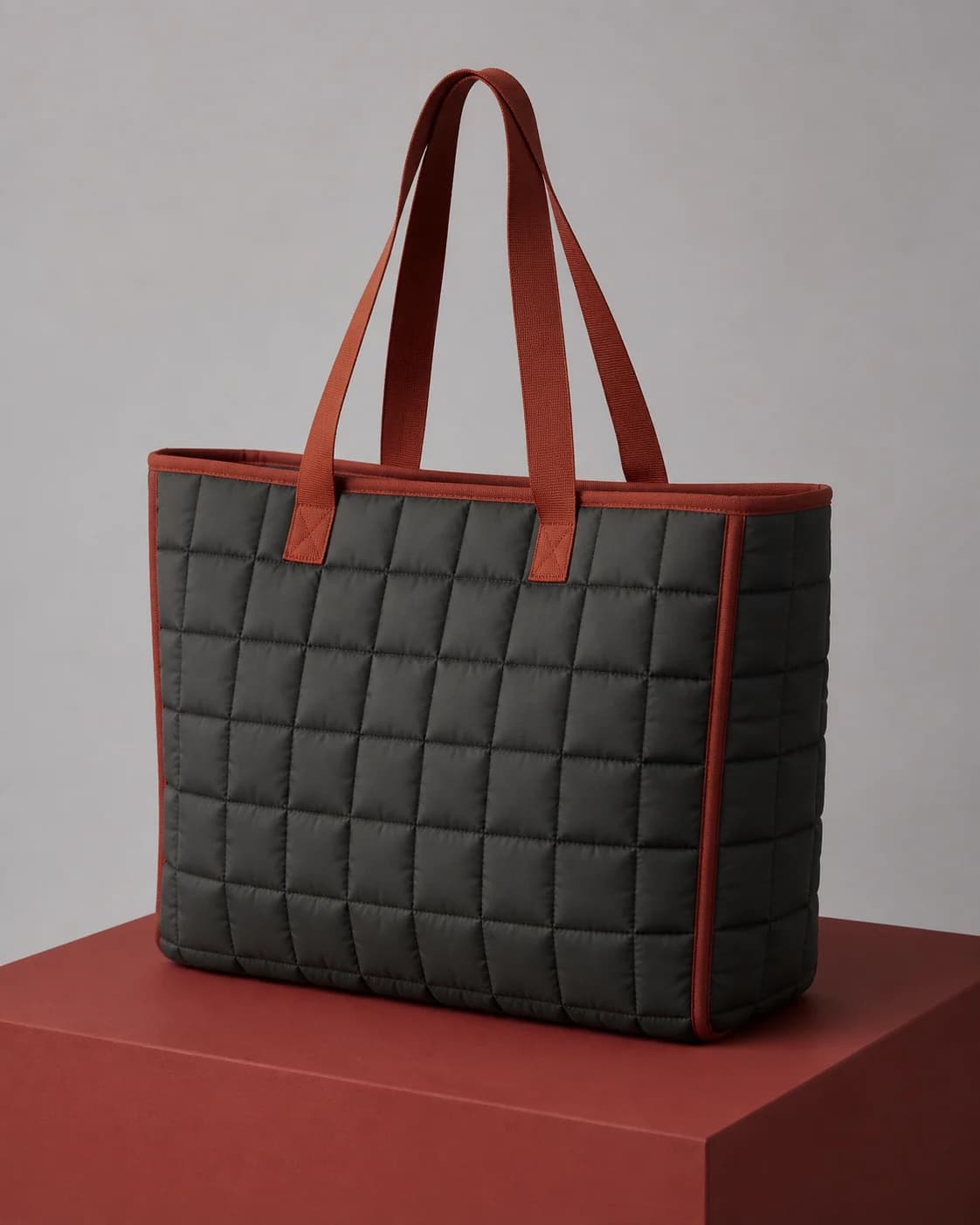
AI concept of an unbranded graphite quilted tote with oxide-red binding.
AI concept for visual review onlyNot a Meyzy product or manufacturing record. Replace before publication.
Included

Quilted totes, puffer shoulder bags, padded handbags and other soft bags whose form depends on a defined layer stack.

Separate categories

Backpacks, insulated bags and technical protective cases are not covered by this page.

Best starting point

A target silhouette, reference, dimensions, use, quantity range and branding direction already exist.

Choose the construction family before specifying isolated details.

Quilted, puffer and simply padded bags may share materials, but they do not create shape or production risk in the same way.

Quilted construction

Best when the stitch field is part of the visible identity and must hold a deliberate rhythm across panels.

Control
Define the layer stack, quilting pitch, alignment reference and panel trimming route together.
Watch for
Changing tension or layer behavior can pull the panel out of shape before assembly.
Puffer construction

Best when volume and softness carry the silhouette more than a visible geometric stitch pattern.

Control
Resolve padding placement, channel direction, fill distribution and compression during assembly and packing.
Watch for
Uneven volume can change the approved outline even when the outer dimensions appear correct.

Simply padded construction

Best when protection, hand feel or body is needed without making quilting the main visual feature.

Control
Specify where padding starts and stops, how it meets seams and which areas must remain flexible.
Watch for
Hidden layer changes can create hard edges, bulk at seams or inconsistent panel recovery.

Build the intended hand feel from a defined material stack.

Shell and padding cannot be approved as unrelated swatches. Their combined drape, compression, stitch response and recovery shape the finished bag.

Public material names and performance values remain pending approval.

ShellSurface, drape, coating and stitch response
PaddingType, thickness, density and recovery target
SupportOptional stabilization where shape or attachment needs it
LiningInterior hand feel, structure and seam compatibility

Approve the stack as one reference, then record any areas where a different support or padding treatment is required.

Quilting is a shape-setting operation, not surface artwork alone.

The stitch field changes compression, alignment and the way a panel meets the rest of the bag.

Pitch sets the visual scale

Large fields read softer and fuller. Tighter fields create more stitch lines and can make distortion easier to see.

Alignment needs a reference

Decide where the pattern starts at openings, side seams, pockets and handle attachments before panels are cut.

Tension changes the silhouette

The same artwork can produce a different panel shape when thread tension and material compression change.

Packing can reshape the product

Folding, stuffing and carton pressure should be reviewed when the approved form depends on volume or recovery.

Edge construction decides whether the approved volume stays clean at assembly.

Binding, turned seams, panel joins and attachment zones must account for the bulk hidden inside the product.

Bound edge

Binding width, fold, material and corner handling determine whether the edge reads crisp, soft or bulky.

Turned seam

The seam build must leave enough room for padding without creating an unintended ridge along the edge.

Panel join

Quilting lines, seam allowances and layer trimming need one assembly reference so adjacent panels meet cleanly.

Attachment zone

Handles, straps, hardware and closures may need reduced bulk or added support at the point of attachment.

Keep the approved shape from becoming an informal memory.

This is a control sequence, not a guarantee of identical softness. Each checkpoint makes the approved standard easier to communicate and compare.

Review the approval comparison

Approve the visible reference

Record the target silhouette, side profile, hand feel, quilting appearance and accepted open deviations.

Lock the hidden stack

Keep one current shell, padding, support and lining reference tied to the approved sample.

Release one construction revision

Align the current pattern, quilting instruction, edge treatment and attachment details before bulk handoff.

Check shape before completion

Review agreed risk points while panels and assemblies can still be corrected, not only after final packing.

Compare against the approved standard

Use the agreed visual and workmanship references for final review instead of relying on memory.

Two product directions show different construction questions.

These are configurable Product Directions, not case studies, stock products or evidence of completed customer work.

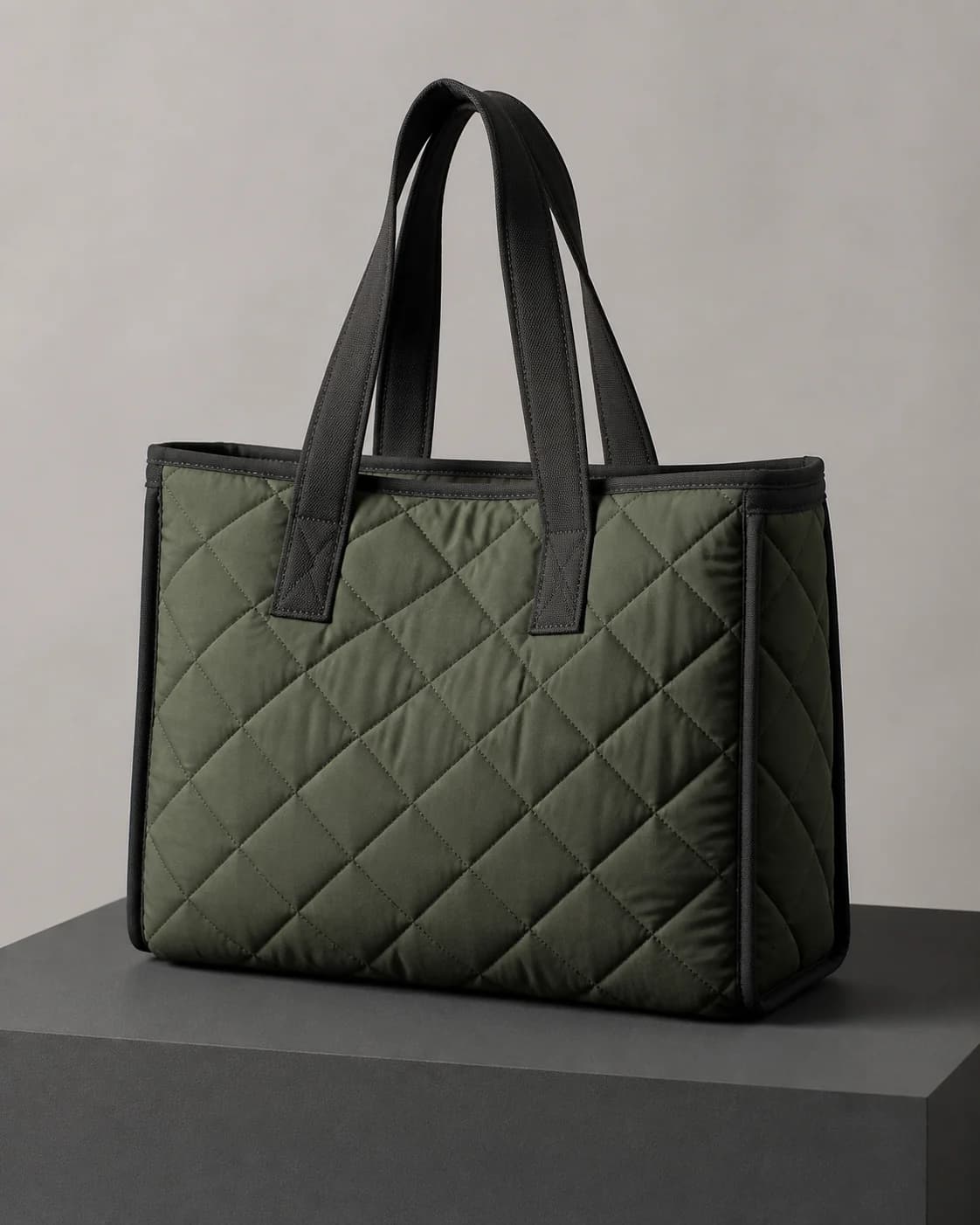
AI concept of an unbranded forest-green diamond-quilted tote.AI CONCEPT / 4:51
Temporary visual directionReplace with approved Meyzy media before publication.

Product direction

Quilted Padded Tote

A structured carry format where quilting alignment, panel body, binding and handle attachment must read as one construction.

  • Quilting field and panel alignment
  • Side and bottom profile
  • Binding and handle attachment
  • Interior structure and closure
Use this direction in the project brief
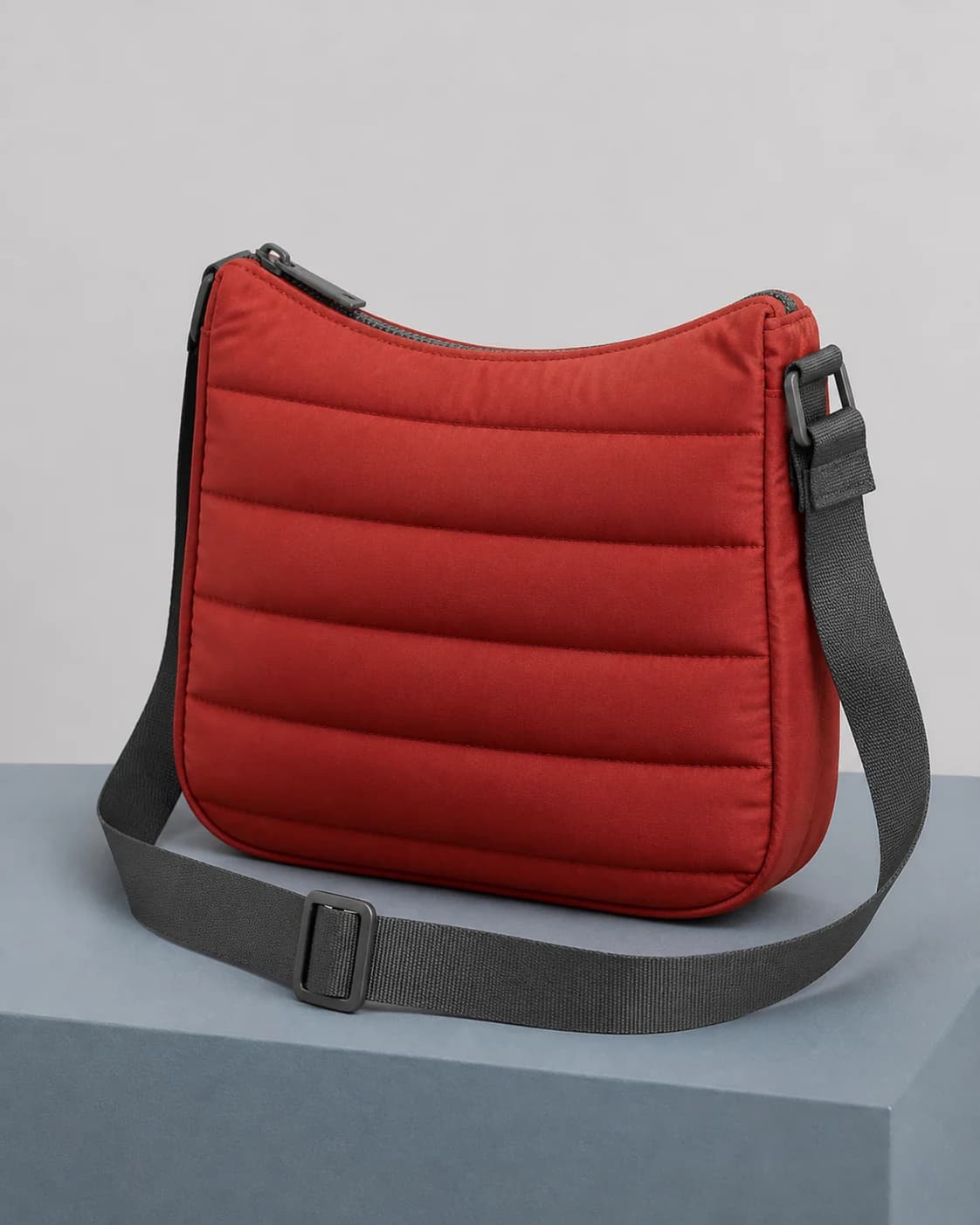
AI concept of an unbranded oxide-red channel-quilted shoulder bag.AI CONCEPT / 4:52
Temporary visual directionReplace with approved Meyzy media before publication.

Product direction

Puffer Shoulder Bag

A softer format where channel direction, padding volume, curved edges and strap integration control the approved silhouette.

  • Channel direction and puffiness
  • Curved opening and edge build
  • Strap and hardware attachment
  • Packing and shape recovery
Use this direction in the project brief

Compare the details that carry shape into repeat production.

A useful approval record identifies what should be judged, where it is visible and which reference controls the decision.

Layer stack
Match the approved shell, padding, support and lining references.
Side profile
Compare depth, edge shape and where volume begins or ends.
Stitch field
Check pitch, alignment, skipped areas and visible tension changes.
Bound edges
Review width, corner handling, seam bulk and color continuity.
Attachments
Check how handles, straps, closures and hardware meet padded zones.
Packed shape
Confirm whether folding, stuffing or carton pressure changes presentation.

A strong project starts with a target product, not only a trend image.

Company size is not the filter. The useful signal is whether the project has enough direction for material, structure and commercial decisions to be reviewed together.

Start a Padded Bag Project

Stronger fit

  • Target silhouette and intended use are understood
  • A reference, sketch or tech pack can guide development
  • Quantity range and branding direction can be discussed
  • The project intends to move through sampling into repeat production

Outside this page

  • One-off personal or retail orders
  • Requests for a universal instant price or MOQ
  • Backpacks, insulated bags or technical protective cases
  • Projects with no target form, scale, use or production intent

Resolve the category questions before the project review.

The answers below define what a reference can and cannot communicate before sampling.

Send the target silhouette, intended use, dimensions, shell direction, quilting or padding reference, expected quantity range, branding needs and the main issue you want the development process to solve.

Padded bag project review

Send enough context to review shape, structure and project fit.

This category is preselected so the project review starts with the relevant construction context.

  • Target silhouette and intended use
  • Reference, sketch, dimensions or tech pack
  • Shell, quilting and branding direction
  • Quantity range and main risk to solve
Secure inquiry: details are saved for project review and expire after 180 days. Private file upload is not enabled yet.

A project specialist reviews fit and missing information. Quotation and sample timing are confirmed only after review.